Before you start
Bazopril, Supplements and Blood Pressure Medicine
Bring the bottle and your full medicine list to your doctor or pharmacist, and ask one plain question: is this a problem with what I take? Garlic and green tea may add to blood thinners, hawthorn may interact with heart medicines, and green tea extract can decrease the levels of some prescriptions. Never stop or change a prescribed medicine on your own.
How do you talk to your doctor about adding a supplement?
Say it plainly, early, and with the bottle in your hand. "I am thinking about taking this. Is it a problem with my medicines?" is the whole conversation in one sentence.
Many people leave it out because it feels minor. The NIH Office of Dietary Supplements advises telling every one of your health care providers about any supplement you take (NIH ODS).
It matters more with blood pressure than with almost anything else, because the prescriptions involved are adjusted against readings and blood tests.
What should you take to the appointment?
Take the bottle, your medicine list and your home readings if you keep them. Five minutes of preparation turns a vague question into one that can be answered properly.
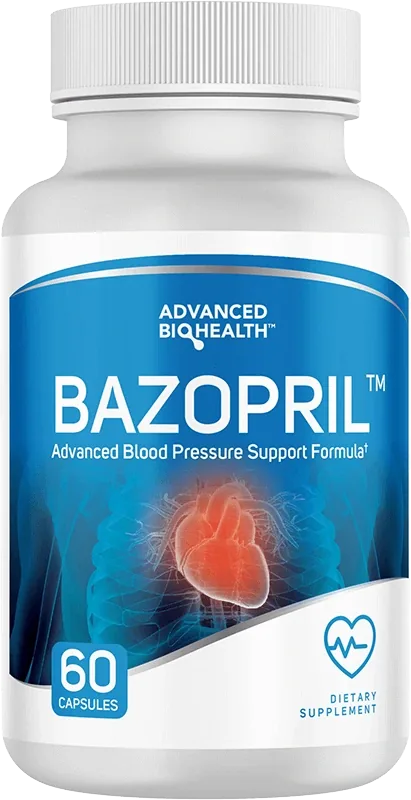
Bring the bottle, or a clear photo of it
Front and back. A clinician reads the label faster than a description, and can see the brand name and any panel.
Bring your full medicine list
Prescriptions, anything you buy over the counter, and every other supplement, including ones you take now and then.
Write down your reason for asking
One sentence is enough. "I saw this online and I want to know if it is a problem with my tablets" works perfectly.
Bring your home readings if you take them
Dates, times and both numbers. A record is the thing your clinician can actually use.
Write the answer down before you leave
What was agreed, what to watch for, and when to check back. Phone notes are fine.
The bottle matters most. With Bazopril there is no published Supplement Facts panel, no serving size and no amount for any of the six named plants, so the label you hold is the only record. Show it, and say that the amounts are not printed.
Which interactions are worth raising?
Four of the six plants named on this panel come with something a clinician would want to know. The table below pairs each one with the question it raises.
| Plant on the panel | What to raise with your clinician | Why it matters |
|---|---|---|
| Lasuna bulb (garlic) | Any anticoagulant or antiplatelet medicine, and any surgery or dental procedure coming up | Garlic may raise bleeding risk alongside blood thinners |
| Camellia sinensis (tea) | Nadolol, atorvastatin and any medicine you were told to take at a set time | Green tea extract can decrease the levels of some medicines |
| Camellia sinensis (tea) | Any liver condition, and any medicine your clinician monitors with liver tests | Green tea extract in capsules has rare reports of liver injury |
| Albaspine (hawthorn) | Any heart medicine at all, named one by one | Hawthorn may interact with medicines used for the heart |
| Mallow flower, conifer berry | Allergies, and the fact that the species and parts are not published | There is no reliable human research and no way to check what is inside |
Blood thinners come first
Garlic may raise the risk of bleeding in people taking anticoagulant medicines, and it is worth mentioning before any surgery (NCCIH, 2025). Green tea is raised in the same conversation for the same reason. If you take warfarin or any similar medicine, this is the line to start with.
Heart medicines and hawthorn
NCCIH reports that hawthorn may interact with medicines used for the heart, and that the evidence for hawthorn itself is little or of poor quality in most conditions (NCCIH, 2025). Albaspine is a traditional name for hawthorn, so this applies here.
Green tea extract can decrease the levels of some medicines, including nadolol and atorvastatin, and capsule extracts carry rare reports of liver injury (NCCIH, 2025). If either is on your list, name it out loud rather than saying "a statin".
What is the rule that never bends?
Keep taking what you were prescribed, exactly as prescribed, until the clinician who prescribed it says otherwise. No supplement changes that, and nothing on this site asks you to change it.
The reason is simple. The National Center for Complementary and Integrative Health states that no dietary supplement has been shown to have the effects of prescription blood pressure medicine (NCCIH). A product that has not been shown to do the job cannot stand in for one that has been studied, prescribed and monitored.
This applies to the wording on the bottle too. Bazopril prints "Advanced Blood Pressure Support Formula". That is label text. It is not a result, it is not a comparison with any medicine, and it is not permission to change a prescription.
What should you ask, and what if the answer is no?
Four questions cover most of it. Ask them in order, and write the answers down.
Is this a problem with what I take?
The direct question, and the one your clinician or pharmacist can answer for you.
Does timing matter?
Some interactions are about spacing. Ask rather than guess, since no serving size is published for this product.
What should I watch for?
Bruising, unusual bleeding, stomach upset, yellowing skin or eyes, or anything new after starting.
When should I check back?
Agree a date to review it, and whether readings or blood tests are wanted in between.
If the answer is no, take the no. A clinician who says to skip it usually has a specific reason: a medicine on your list, a test result, a procedure coming up, or a liver or kidney issue. Ask what the reason is, so you know whether it applies to this product only or to that kind of supplement in general.
If the answer is yes, ask what to watch for and when to check back. Keep your usual appointments and your usual readings, and the basics guide explains why that schedule exists.
Can a pharmacist help instead?
Yes, and it is often the faster route. A pharmacist has your prescription list on file, can check an interaction while you wait, and does not need an appointment. Take the bottle to the counter and ask the same question you would ask a doctor.
- Say what you are taking, even if you think it is too small to mention.
- Say it before surgery, dental work or any procedure, and say it early.
- Say it again if your prescription changes, since the answer can change with it.
- Ask the pharmacy that fills your prescriptions. They have your full list on file.
- Waiting until the next annual visit to mention something you started this month.
- Assuming a plant product cannot interact because it is not a drug.
- Taking a supplement on top of another one with the same plant in it, without checking.
- Treating a good home reading as a reason to change anything on your own.
One more habit is worth building. Keep a single list of everything you take, prescriptions and supplements together, on your phone, and update it the day something changes.
What does this post not tell you?
It does not tell you how much of anything to take, whether to take this product, or what your readings mean. None of those can be answered from a website.
No serving size is published for Bazopril, and no amount is published for any of the six named plants. The post on missing information lists every blank. The research post covers what has actually been studied for each plant, and at what quantities.
What this post can do is make the next appointment a better one. Bring the bottle, bring the list, ask the question, and keep the prescription exactly as written while you wait for the answer.
For anything about an order, tracking or a refund, the order desk is on +1 (100) 819-1122. For page errors and privacy questions, the website inbox is [email protected], Mon-Fri 9:00am-5:00pm ET, and it cannot see orders.
Questions people ask about this
Should I tell my doctor about a supplement?
Yes. Tell every one of your health care providers about anything you take, including supplements you only take now and then.
Can I stop my blood pressure medicine if I start a supplement?
No. Keep taking what was prescribed, exactly as prescribed. That decision belongs to the clinician who wrote the prescription.
Which Bazopril plants interact with medicines?
Garlic and green tea may add to blood thinners, hawthorn may interact with heart medicines, and green tea extract can decrease the levels of nadolol and atorvastatin.
What should I take to the appointment?
The bottle or a clear photo of it, your full medicine list, your home readings if you keep them, and one written question.
Can a pharmacist answer this instead?
Often yes, and faster. They hold your prescription list, can check an interaction on the spot, and will contact the prescriber if a decision is needed.
How many capsules a day should I take?
Not published. Follow the directions printed on your own bottle, and call the order desk on +1 (100) 819-1122 if your bottle differs from what you expected.
Sources for this page
- National Center for Complementary and Integrative Health. Hypertension (High Blood Pressure). Source
- National Center for Complementary and Integrative Health. Garlic: Usefulness and Safety. Updated February 2025. Source
- National Center for Complementary and Integrative Health. Hawthorn: Usefulness and Safety. Updated April 2025. Source
- National Center for Complementary and Integrative Health. Green Tea: Usefulness and Safety. Updated February 2025. Source
- NIH Office of Dietary Supplements. Dietary Supplements: What You Need to Know. Source
Keep reading
Ready when you are
Order Bazopril from the authorized US retailer
60 capsules in every bottle. Follow the label on your bottle. 60-day money-back guarantee. A real person at +1 (100) 819-1122 for orders, tracking and refunds.