Research review
Bazopril's Six Named Plants and What Research Says
The Bazopril panel names six plants. Olive leaf has five small trials behind it at 500 to 1,000 mg a day for 6 to 12 weeks. Garlic has limited evidence of a small effect. Hawthorn and tea are thinner. Mallow flower and conifer berry have no reliable human evidence for blood pressure. No amount is published for any of them.
What does research say about the six plants in Bazopril?
It says a great deal about two of them, a little about two more, and almost nothing about the last two. None of it adds up to a claim about this product, because no amount is published for any plant.
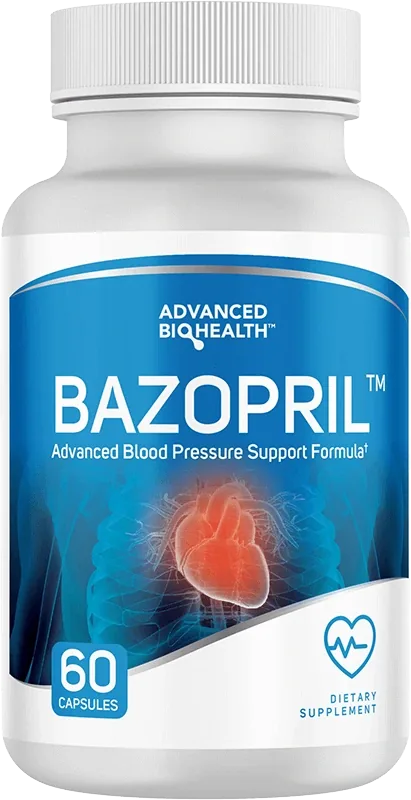
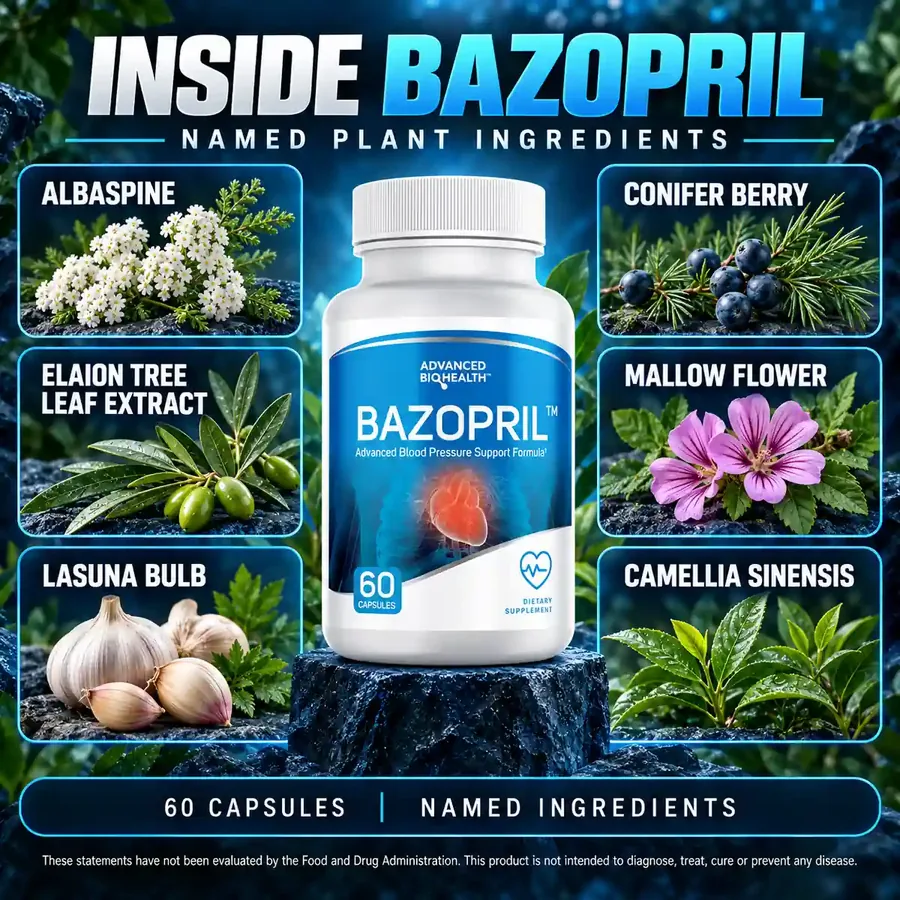
The Bazopril brand panel is headed "Inside Bazopril: named plant ingredients" and lists six names. No Supplement Facts panel was published, so there is no serving size and no figure beside any name.
| Panel name | What the name points to | What published research shows | What the panel leaves out |
|---|---|---|---|
| Albaspine | A traditional name for hawthorn (our note, not the label's) | Little or no quality evidence for most uses, and conflicting results in heart failure | Plant part, extract strength, amount |
| Conifer Berry | A conifer berry, species not named. Juniper is the berry usually sold this way | No reliable human trials for blood pressure | Which conifer, extract strength, amount |
| Elaion Tree Leaf Extract | Elaion is Greek for olive, so olive leaf | Five small trials, the most studied plant on this list | Extract strength, amount, which trial it follows |
| Mallow Flower | Malva, the common mallow, used in teas | Human research for the heart is thin | Extract strength, amount |
| Lasuna Bulb | Lasuna is the Ayurvedic name for garlic | Limited evidence of a small effect in people with high blood pressure | Whether it is powder, oil or extract, and how much |
| Camellia Sinensis | The tea plant, green and black tea | Small effects in reviews, with a safety note on extracts | Leaf or extract, caffeine content, amount |
One line from the National Center for Complementary and Integrative Health frames all of it. No dietary supplement has been shown to have the effects of prescription blood pressure medicine (NCCIH). Garlic and tea sit on the short list of items with modest evidence, and modest is doing real work in that sentence.
Two with a real record
Olive leaf and garlic have human trials behind them, at specific amounts and over specific weeks.
Two with a thin record
Hawthorn and tea appear in reviews, but the findings are small, mixed or tied to other conditions.
Two with almost nothing
Mallow flower and conifer berry have no reliable human evidence for blood pressure at all.
Albaspine: what is known about hawthorn?
Albaspine is a traditional name for hawthorn. That is our note for readers, not the label's wording, because the panel prints only the one word.
NCCIH reports that there is little or no quality evidence for hawthorn in most of the conditions it is sold for, and that studies in heart failure have come back with conflicting results (NCCIH, 2025). It also notes that hawthorn may interact with medicines used for the heart.
The plant part is not stated on the panel. Hawthorn is sold as leaf, flower and berry, and they are not interchangeable. No extract strength is given either, so there is nothing to match against published work.
Conifer berry: which conifer is it?
The panel does not say. It prints "conifer berry" and stops there, which means the species is unknown to anyone reading the page.
Juniper is the berry most often sold under a description like this. That is background, not identification. Without a species name, a buyer cannot look the plant up or check it against an allergy.
There are no reliable human trials of conifer or juniper berry for blood pressure. This is the weakest entry on the list for evidence, and the least described on the panel. The ingredients page marks both gaps.
Elaion tree leaf extract: what did the olive leaf trials find?
Elaion is the Greek word for olive, so elaion tree leaf extract means olive leaf extract. It is the most studied plant on this panel.
A 2021 systematic review and meta-analysis by Ismail and colleagues pooled five small trials in adults with raised blood pressure. They used 500 to 1,000 mg of olive leaf extract a day for 6 to 12 weeks. The review reported a drop in the systolic number at the 500 mg dose, while noting that the number of participants was limited (Ismail et al., 2021).
Read that carefully. Five small trials is a thin base, and the finding sat at one daily amount over a set number of weeks. Bazopril publishes no amount of olive leaf extract and no extract strength, so nobody can say how a capsule compares.
Why an amount changes everything
Every study on this page used a quantity and a length of time. A review can only say what it measured, at the amount it measured. Without a figure on the label, a shopper has no way to tell whether a capsule holds a studied quantity or a trace.
That is the single gap that runs through all six plants here. The names are printed. The numbers are not.
Mallow flower: is there any human evidence?
Very little. Mallow, the garden flower from the Malva family, has a long history in teas and a thin human research record for the heart.
Because the research is thin, no meaningful daily amount can be set from it. A plant with almost no trials cannot be compared with one that has five. The panel gives no extract strength and no amount here either.
Lasuna bulb: what does NCCIH say about garlic?
Lasuna is the Ayurvedic name for garlic, and the bulb is the part people eat. After olive leaf, it is the most studied plant on this list.
NCCIH reports limited evidence that garlic may have a small effect on blood pressure in people who already have high blood pressure (NCCIH, 2025). It also flags a safety point that matters more than the effect: garlic may raise the risk of bleeding in people taking anticoagulant medicines, and it is worth raising before surgery.
Garlic products vary enormously. Fresh cloves, dried powder, oil and aged extract are all sold as garlic and are not the same material. The panel says "lasuna bulb" and nothing else.
Camellia sinensis: what about green and black tea?
Camellia sinensis is the tea plant. Green tea and black tea both come from it, and the panel does not say which, or whether the capsules hold leaf or a concentrated extract.
Reviews of green tea have found small effects on blood pressure measures, which is why NCCIH lists tea among the items with modest evidence. Two safety points sit beside that. Green tea extract in capsule form carries rare reports of liver injury, and it can decrease the levels of some medicines, including nadolol and atorvastatin (NCCIH, 2025).
Caffeine is the other unknown. Tea leaf carries caffeine and decaffeinated extracts carry very little. The panel says nothing either way.
What do the six add up to?
Six plant names, two with a research record worth reading, and no amount for any of them. That is the honest total, and it is less than a sales page would suggest.
The research above describes plants, not this product. No study was run on Bazopril, and none is published beside the label line "Advanced Blood Pressure Support Formula".
If you want the gaps in one list, the post on missing information sets them out, and the checklist guide turns them into questions you can ask about any bottle.
Follow the directions printed on the bottle you receive, since no serving size is published. The basics guide covers what a doctor does that no capsule can.
Questions people ask about this
Which of the six plants has the most research?
Olive leaf. A 2021 review pooled five small trials that used 500 to 1,000 mg a day for 6 to 12 weeks in adults with raised blood pressure.
Is albaspine the same as hawthorn?
Albaspine is a traditional name for hawthorn. That is our note for readers. The panel prints only the word albaspine.
Which conifer is the conifer berry from?
Not published. The panel does not name a species. Juniper is the berry usually sold under that kind of description.
How much of each plant is in a Bazopril capsule?
Not published. No Supplement Facts panel was supplied, so no amount, extract strength or plant part can be printed here.
Do these studies apply to Bazopril?
No. They describe the plants, at amounts the studies chose. No study of this product is published, and no amount in it is published either.
Which of the six matter for medicines?
Garlic and green tea may add to the effect of blood thinners, hawthorn may interact with heart medicines, and green tea extract can decrease the levels of some prescriptions.
Sources for this page
- National Center for Complementary and Integrative Health. Hypertension (High Blood Pressure). Source
- National Center for Complementary and Integrative Health. Hawthorn: Usefulness and Safety. Updated April 2025. Source
- Ismail MA, et al. Olive leaf extract effect on cardiometabolic profile among adults with prehypertension and hypertension: a systematic review and meta-analysis. PeerJ, 2021. Source
- National Center for Complementary and Integrative Health. Garlic: Usefulness and Safety. Updated February 2025. Source
- National Center for Complementary and Integrative Health. Green Tea: Usefulness and Safety. Updated February 2025. Source
- NIH Office of Dietary Supplements. Dietary Supplements: What You Need to Know. Source
Keep reading
Ready when you are
Order Bazopril from the authorized US retailer
60 capsules in every bottle. Follow the label on your bottle. 60-day money-back guarantee. A real person at +1 (100) 819-1122 for orders, tracking and refunds.